

Nutrition for Ultra-Endurance Running: What the Evidence Actually Says

If you're training for your first ultra, or your fiftieth, fuelling is often the hardest part to get right. Harder than the training itself, for a lot of runners. It's also the part most likely to end your race early if it's ignored.
This guide breaks down the evidence-based basics of ultra-marathon nutrition, from training through to race day, based on the International Society of Sports Nutrition's position stand on single-stage ultra-marathon nutrition (Tiller et al., 2019).
Ultra-endurance running is generally defined as any distance exceeding the traditional marathon (42.2km).
Carbohydrates: your training-day priority
Training on a moderate-to-high carbohydrate diet keeps glycogen stores topped up, so your legs aren't running on empty before you've even reached the start line.
Target: 5–8g of carbohydrate per kg of body weight, per day
This is a training guideline, not a race-day one. It reflects the fuel your body needs to recover and adapt between long training sessions, particularly during heavier training blocks.
Protein: rebuilding what training breaks down
Consistent protein intake supports recovery and lean muscle mass through training. Requirements climb further as training volume and intensity peak.
Target: 1.6–2.5g of protein per kg of body weight, per day
Most runners find this target relatively easy to hit given the overall volume of food they're eating to support training, so it rarely needs to be a separate focus the way carbohydrate intake does.
Hydration and sodium: the part most runners get wrong
Hydration and electrolyte needs vary significantly between individuals and environments. Someone running in hot, humid conditions will need considerably more fluid and sodium than someone training in a cool climate.
Fluid: 450–750mL per hour
Sodium is where things get trickier. Standard sports drinks are often under-dosed for the sodium losses seen in ultra-distance events, which is part of why hyponatraemia (dangerously low blood sodium) remains a real risk in longer races.
Sodium: roughly 300–600mg per hour, trending higher in hot or humid conditions
These are rough guidelines, not fixed prescriptions. Sweat sodium concentration varies hugely between individuals, so working with a sports dietitian to establish your own sweat rate and sodium losses will always beat a generic number.
Race-day fuelling: little and often
Race-day nutrition should focus primarily on carbohydrates, but incorporating protein and fat throughout is important for managing appetite and keeping food appealing over many hours.
Target: 30–50g of carbohydrate and 5–10g of protein per hour
As the race progresses, most runners notice their preferences shift from sweet to savoury. Some tried-and-tested combinations include:
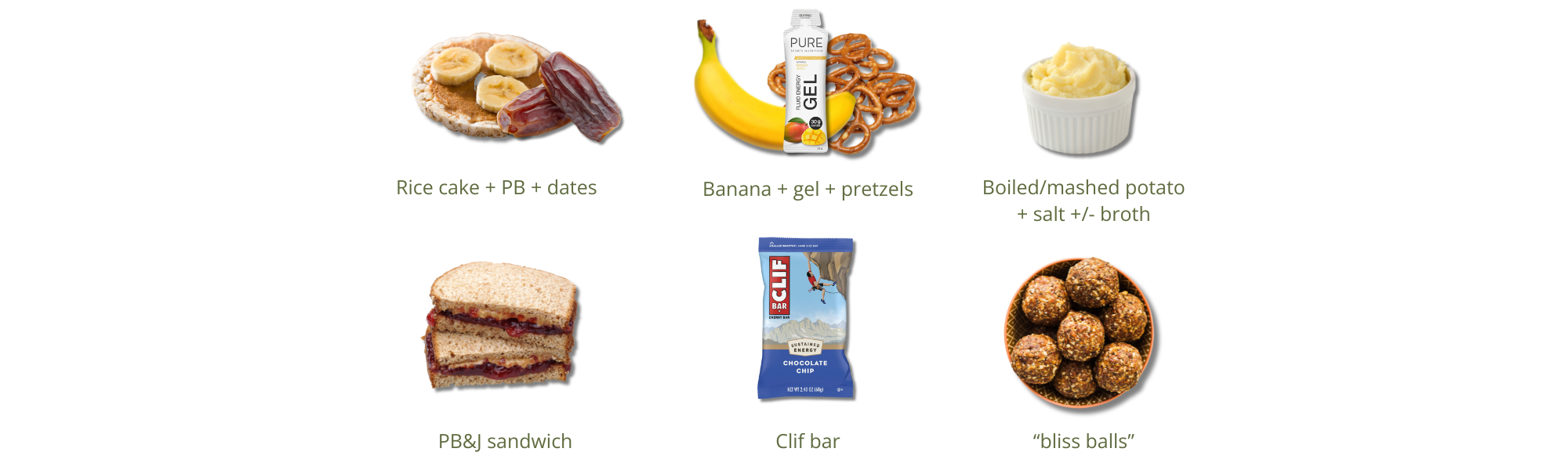
Broth and a small cheese sandwich also work well later in a race: broth is one of the most-craved aid station items in longer events, and the combination of bread, cheese and broth delivers a useful mix of carbohydrate, protein, fat and sodium in one go.
Gut training: the reason most DNFs happen
Gastrointestinal issues are one of the most common reasons runners drop out of ultra events. Training your gut is just as important as training your legs.
The rule here is simple: practise your race nutrition in training, and try nothing new on race day. If you're prone to gut issues, a low-FODMAP approach in the lead-up to a race can also help reduce the risk of toilet emergencies mid-event.
Caffeine: a strategic late-race tool
Caffeine can be a useful ergogenic aid in ultra-distance events. It helps by reducing perceived effort and sustaining performance, particularly late in a race when fatigue and sleep deprivation start to affect focus and decision-making.
Pre-race: 3–6mg of caffeine per kg of body weightDuring the race: 1–2mg per kg, in repeated smaller doses
Dose and timing both matter, and individual tolerance varies a lot. Trial your caffeine strategy in training well before race day, rather than experimenting on the course.
The bottom line: fuelling is trainable, not guesswork
Every runner's needs differ based on body size, pace, gut tolerance and race distance. The numbers above are a solid starting point, but a personalised fuelling plan, built around your own physiology and race demands, will always outperform a generic schedule.
If you're heading into a big training block or an upcoming ultra and want a fuelling strategy built specifically around you,book a consult here.
Not sure if you are ready for personalised nutrition strategies and want to find out more?Book a free 15 minute discovery call here
Want to ask more questions? Feel free to send a question
This article is intended as general information and is not individualised medical or nutrition advice.
Source: Tiller NB, et al. International Society of Sports Nutrition Position Stand: Nutritional Considerations for Single-Stage Ultra-Marathon Training and Racing. Journal of the International Society of Sports Nutrition. 2019;16(1):50.